
Image Courtesy: CFI
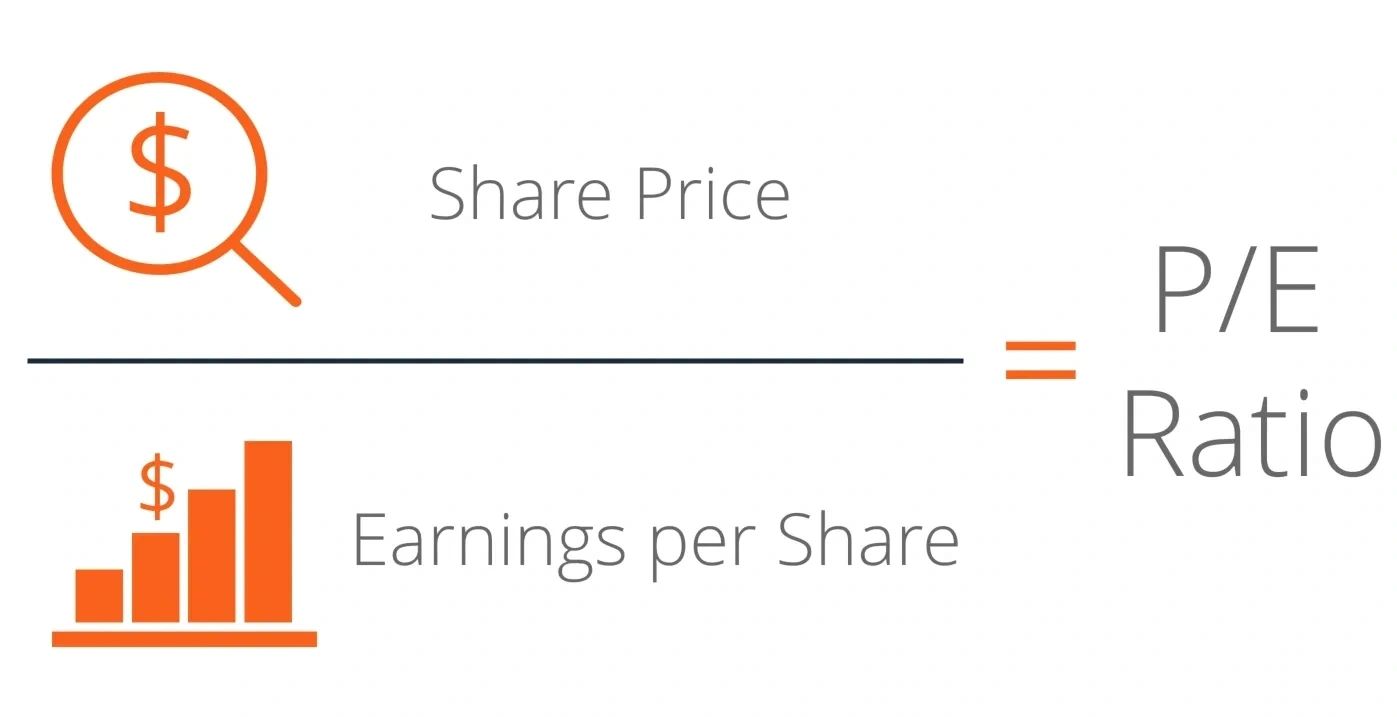
When making investment decisions, people often look to various financial metrics to guide them, and one of the most commonly relied upon is the Price-to-Earnings (P/E) ratio. On the surface, it seems like a straightforward tool to assess whether a business is undervalued or overvalued. However, despite its popularity, the P/E ratio can be dangerously misleading. Investors might be drawn to a stock with a low P/E ratio, thinking it offers a bargain, but without understanding the underlying factors. This approach can lead to poor judgments, value traps and failures. Here's few factors/parameters/situations one should consider before judging a P/E:
1. Cyclicality of Margins and Earnings
- Cyclicality in Business: Many industries, such as commodities, energy, and real estate, have cyclical earnings. During boom periods, earnings spike, leading to artificially low P/E ratios, which may make the business seem cheap. Conversely, during downturns, earnings plummet, making the P/E ratio seem high, indicating the business is expensive when it might actually be a good time to buy.
- Profit Margin Volatility: Business margins can fluctuate due to external factors such as input costs, competition, and economic cycles. High margins during good times can inflate earnings, lowering the P/E ratio and making the business look undervalued. However, these margins are often not sustainable in the long run, leading to a reversion to the mean, which can result in lower future earnings and an overvaluation if based solely on the low P/E.
2. Earnings Manipulation
- Accounting Adjustments: Earnings are subject to various accounting practices that can distort the actual profitability of a company. Companies can use techniques like deferring expenses, one-time gains, or other creative accounting methods to inflate earnings, making the P/E ratio look more attractive than it should be.
3. Focus on Short-term Profits
- Neglect of Long-term Value: The P/E ratio focuses solely on the current or trailing earnings. It doesn’t account for future growth potential, business strategy, or competitive positioning. A company with temporarily low earnings due to investments in R&D, expansion, or innovation may have a high P/E, but could represent significant long-term value. In contrast, a company with high short-term profits but poor future prospects could look cheap on a P/E basis but might be a value trap.
4. Ignoring Debt and Capital Structure
- Leverage: The P/E ratio doesn't consider a company’s debt levels. Two companies with the same earnings but vastly different levels of debt will have different risk profiles. A highly leveraged company may have inflated earnings in the short term, but higher financial risk, which the P/E ratio fails to reflect.
5. Industry Comparisons
- Sector-Specific Challenges: Different industries have varying capital requirements, growth rates, and risk profiles. A "low" P/E in one industry might signal a great buy, while in another industry it might signal a structural problem. Comparing P/E ratios across sectors without understanding the context can lead to misjudgment.
6. Growth vs. Value Distortion
- Growth Companies: Fast-growing companies often trade at high P/E ratios because the market expects future earnings to grow significantly. Relying too much on a high P/E could make an investor avoid a potentially great long-term investment. On the other hand, low P/E companies might be in decline or facing structural issues.
Conclusion on Misjudgment of P/E
Because P/E is overly dependent on the current earnings environment, it can mislead investors about a company's true valuation, particularly in cyclical industries where earnings fluctuate wildly. The cyclicality of margins, where periods of high profitability may soon reverse, and the failure of P/E to account for capital structure, future growth, and industry context, make it an unreliable sole metric. More holistic approaches that look at operating cash flows, future earnings potential, capex and underlying demand, and balance sheet strength often provide a clearer picture of value. Next time, don't filter out stocks which are trading at high P/E and don't end up making watchlist of stocks trading at low P/E.